
Hiking is one of the most popular outdoor activities in Calgary and the surrounding Rocky Mountain region. Whether you're exploring the trails in Kananaskis Country, Banff National Park, Canmore, or enjoying local pathways around Calgary, hiking is an excellent way to stay active, improve cardiovascular health, and connect with nature. However, uneven terrain, steep elevation changes, long descents, and overuse can also increase the risk of injury.
Understanding the most common hiking injuries in Calgary can help you recognize early warning signs, reduce your risk of injury, and recover more effectively if pain develops. From ankle sprains and knee pain to Achilles tendon injuries, muscle strains, and lower back pain, many hiking-related injuries can be prevented with proper preparation and treated successfully with physiotherapy.
In this guide, our physiotherapists share practical tips to help you prevent common hiking injuries, stay safe on the trails, and enjoy Alberta's incredible hiking season with confidence.
The Most Common Hiking Injuries in Calgary
While every hiking trail presents different challenges, Calgary physiotherapists most commonly treat the following hiking-related injuries during the spring, summer, and fall hiking season:
- Ankle sprains
- Knee pain (including hiker's knee)
- Achilles tendon injuries
- Plantar fasciitis
- Muscle strains
- Lower back strains
- Blisters
- Heat exhaustion
Many of these injuries can be prevented with proper conditioning, supportive footwear, trekking poles, gradual training, and adequate hydration. If pain develops during or after a hike, early physiotherapy treatment can help speed recovery and reduce the risk of ongoing problems.
Why Hiking Injuries Happen in the Calgary Region
Calgary's close proximity to Kananaskis Country, Banff National Park, Canmore, and the Canadian Rockies gives outdoor enthusiasts access to hundreds of hiking trails ranging from beginner-friendly pathways to challenging alpine terrain. While this accessibility makes hiking one of Calgary's most popular summer activities, it also increases the risk of injury.
Unlike walking on paved surfaces, hiking places greater demands on your muscles, joints, tendons, and balance. Uneven ground, loose rocks, steep climbs, long descents, changing weather conditions, and carrying a backpack all increase physical stress on the body.
Several factors commonly contribute to hiking injuries, including:
- Sudden exposure to steep inclines and uneven terrain
- Rapid increases in hiking distance or elevation gain
- Muscle fatigue and inadequate conditioning
- Poorly fitting footwear or worn hiking boots
- Carrying heavy or improperly adjusted backpacks
- Dehydration and heat-related fatigue
Understanding these risk factors is the first step toward preventing injury. With proper preparation, strength training, appropriate equipment, and early treatment when pain develops, most hiking injuries can be prevented or managed before they become long-term problems.
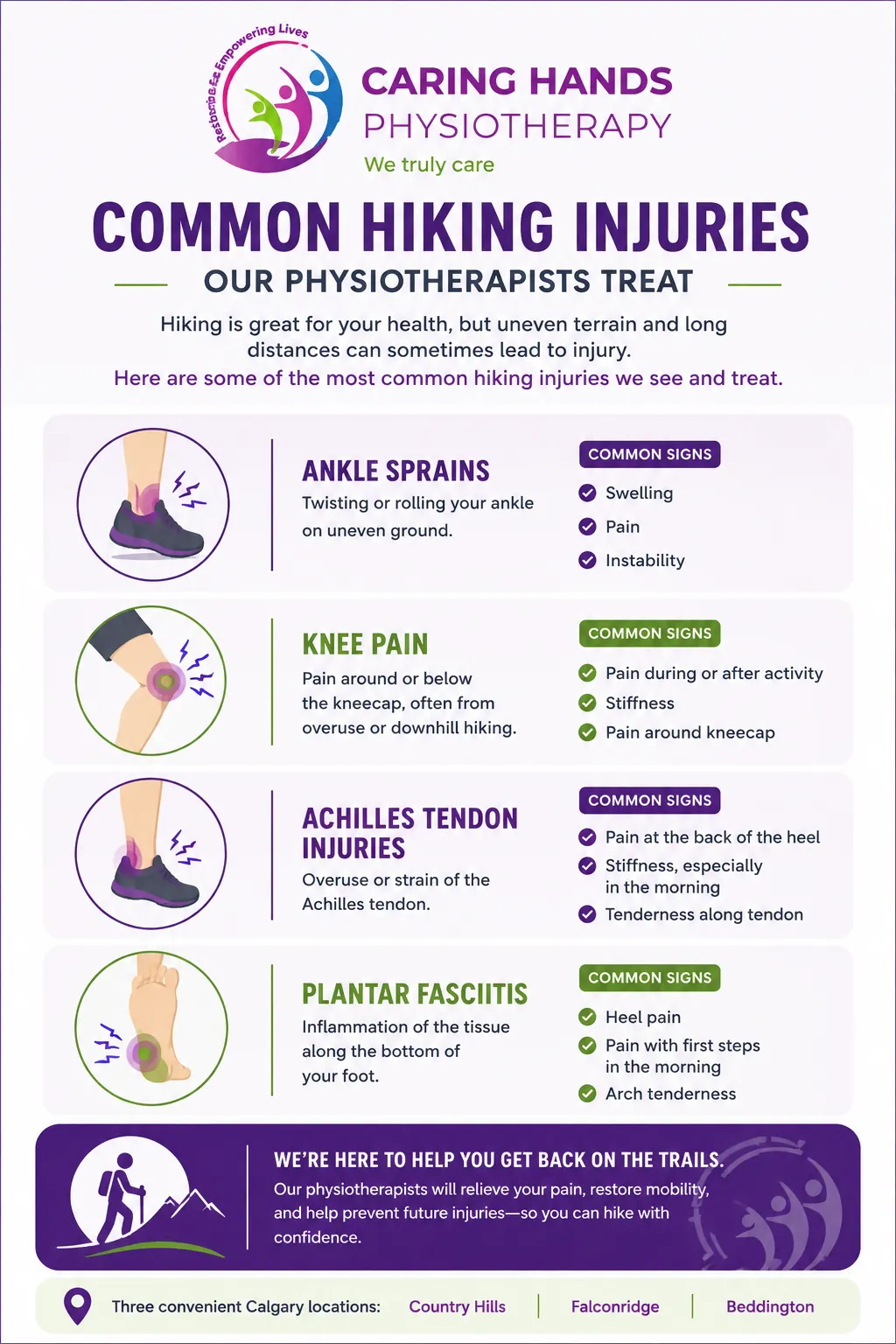
Learn about four of the most common hiking injuries—including ankle sprains, knee pain, Achilles tendon injuries, and plantar fasciitis—and the symptoms our physiotherapists commonly treat at Caring Hands Physiotherapy in Calgary.
Top Hiking Injuries Seen by Calgary Physiotherapists
1. Ankle Sprains
Why it happens
Ankle sprains are the most common hiking injury seen by Calgary physiotherapists. Uneven trails, loose rocks, exposed tree roots, slippery surfaces, and unexpected changes in elevation can easily cause the foot to roll inward, stretching or tearing the ankle ligaments.
Common symptoms
- Pain around the outside of the ankle
- Swelling and bruising
- Difficulty bearing weight
- Instability or the feeling that the ankle may "give way"
Immediate action
Protect the injured ankle, avoid activities that increase pain, elevate the leg when possible, apply a compression bandage to help manage swelling, and seek a physiotherapy assessment if you cannot comfortably bear weight or if swelling or pain continues to worsen over the next 24–48 hours.
How physiotherapy can help
Early physiotherapy can reduce pain, restore mobility, and lower the risk of chronic ankle instability. Treatment may include:
- Manual therapy to restore joint mobility
- Balance and proprioception retraining
- Strengthening exercises for the ankle and lower leg
- Taping or bracing recommendations for a safe return to hiking
- Progressive return-to-trail programming
Recovery timeline
A mild ankle sprain may improve within 2–4 weeks, while moderate to severe sprains often require 6–12 weeks of rehabilitation depending on the extent of ligament damage.
When to seek treatment
Book a physiotherapy assessment if you cannot bear weight, swelling continues to increase after 24–48 hours, your ankle feels unstable, or pain persists beyond a few days. Early treatment helps prevent long-term weakness and repeated sprains.
2. Knee Pain (Hiker's Knee)
Why it happens
Knee pain is one of the most common overuse injuries experienced by hikers in Calgary. Long descents, steep trails, uneven terrain, weak hip and leg muscles, and poor walking mechanics can place excessive stress on the kneecap and surrounding tissues. This condition is often referred to as hiker's knee or patellofemoral pain syndrome.
Common symptoms
Pain around or behind the kneecap
Pain that worsens when hiking downhill
Stiffness after prolonged sitting or resting
Clicking or grinding sensations when bending the knee
Tenderness during squatting, climbing stairs, or descending slopes
Immediate action
Reduce your hiking distance or stop if the pain becomes significant. Avoid repeatedly hiking through pain, especially on steep descents. Applying ice after activity and using trekking poles to reduce stress on the knees may help manage symptoms until you can be assessed.
How physiotherapy can help
Physiotherapy addresses the underlying causes of knee pain rather than simply treating the symptoms. Your treatment plan may include:
Strengthening the quadriceps, gluteal, and hip muscles
Improving flexibility in tight muscles and soft tissues
Gait and movement analysis to improve hiking mechanics
Patellar taping techniques when appropriate
Progressive strengthening and return-to-hiking exercises
Recovery timeline
Most mild cases improve within 4–8 weeks with appropriate rehabilitation, while persistent or long-standing knee pain may require several months of progressive strengthening and movement retraining.
When to seek treatment
Book a physiotherapy assessment if knee pain persists for more than a few days, repeatedly returns during hikes, causes swelling, limits your ability to walk, or prevents you from enjoying normal daily activities. Early treatment can prevent minor irritation from becoming a chronic problem.
3. Achilles Tendon Injuries
Why it happens
The Achilles tendon connects your calf muscles to your heel and plays a critical role during hiking, especially on steep climbs. Rapid increases in hiking distance, repeated uphill hiking, tight calf muscles, inadequate warm-ups, and worn footwear can overload the tendon, leading to irritation or Achilles tendinopathy.
Common symptoms
Pain or stiffness at the back of the heel
Morning stiffness that improves with movement
Tenderness when pressing on the tendon
Pain during uphill hiking or climbing stairs
Swelling or thickening of the Achilles tendon
Immediate action
Reduce activities that aggravate the pain and avoid continuing long or steep hikes if symptoms worsen. Applying ice after activity and gently stretching the calf muscles may provide temporary relief, but persistent pain should be professionally assessed.
How physiotherapy can help
Physiotherapy focuses on reducing tendon irritation while restoring strength and flexibility. Your treatment plan may include:
Progressive calf strengthening exercises
Eccentric loading programs for the Achilles tendon
Manual therapy to improve ankle mobility
Stretching techniques to improve calf flexibility
Footwear recommendations and gait assessment for hiking
Recovery timeline
Mild Achilles tendon injuries often improve within 4–8 weeks, while more persistent cases may require 3–6 months of progressive rehabilitation depending on tendon health and activity levels.
When to seek treatment
Book a physiotherapy assessment if heel pain persists for more than a week, worsens during activity, causes limping, or limits your ability to hike comfortably. Early treatment can help prevent chronic tendon problems and reduce the risk of tendon rupture.
4. Plantar Fasciitis
Why it happens
Plantar fasciitis is one of the most common causes of heel pain among hikers in Calgary. Long hiking distances, uneven terrain, worn footwear, poor arch support, tight calf muscles, and sudden increases in hiking volume can overload the plantar fascia—the thick band of tissue that supports the arch of the foot.
Common symptoms
Sharp pain under the heel, especially with the first steps in the morning
Heel pain after long hikes or prolonged standing
Tenderness along the bottom of the heel
Stiffness that improves after walking but returns later in the day
Increased discomfort when walking barefoot on hard surfaces
Immediate action
Reduce your hiking distance if heel pain develops and avoid pushing through persistent discomfort. Rolling the arch of your foot over a massage ball or frozen water bottle, performing gentle calf stretches, and wearing supportive footwear may help relieve symptoms until you can be assessed by a physiotherapist.
How physiotherapy can help
Physiotherapy focuses on reducing pain while correcting the underlying factors contributing to plantar fasciitis. Your treatment plan may include:
Plantar fascia and calf stretching exercises
Foot strengthening and arch stabilization exercises
Manual therapy to improve foot and ankle mobility
Footwear assessment and orthotic recommendations when appropriate
Progressive return-to-hiking exercises and load management
Recovery timeline
Many cases improve within 6–12 weeks when treatment begins early and rehabilitation exercises are followed consistently. More persistent or long-standing cases may require several months of progressive rehabilitation.
When to seek treatment
Book a physiotherapy assessment if heel pain lasts longer than one to two weeks, worsens during walking or hiking, repeatedly returns after activity, or begins interfering with your daily activities. Early treatment can prevent chronic heel pain and speed your recovery.
5. Low Back Strains
Why it happens
Lower back strains are a common hiking injury, especially on Calgary's steep mountain trails where long ascents, descents, and heavy backpacks place increased stress on the spine and surrounding muscles. Your lower back works hard to stabilize your body during hiking, particularly when carrying a backpack over uneven terrain.
Common symptoms
- Dull or sharp pain in the lower back
- Muscle tightness or spasms
- Pain that worsens with bending, lifting, or twisting
- Stiffness after long hikes or prolonged sitting
- Reduced range of motion
Immediate action
Stop hiking if back pain becomes severe or begins affecting your balance or walking pattern. Remove unnecessary weight from your backpack, avoid heavy lifting, and apply gentle movement rather than prolonged bed rest. Ice or heat may help relieve discomfort depending on your symptoms.
How physiotherapy can help
Physiotherapy helps relieve pain while improving strength, mobility, and hiking mechanics to reduce the risk of future injuries. Your treatment plan may include:
- Core stabilization and lumbar strengthening exercises
- Manual therapy to improve spinal mobility
- Soft tissue treatment for tight muscles
- Postural assessment and backpack fitting advice
- Movement retraining and progressive return-to-hiking exercises
Recovery timeline
Most mild lower back strains improve within 2–6 weeks with appropriate treatment and activity modification. More significant muscle or joint injuries may require longer rehabilitation depending on severity and your overall fitness.
When to seek treatment
Book a physiotherapy assessment if your back pain lasts longer than a few days, repeatedly returns during hikes, radiates into your leg, causes numbness or weakness, or limits your ability to perform everyday activities. Early treatment can help prevent recurring back problems and speed your return to hiking.
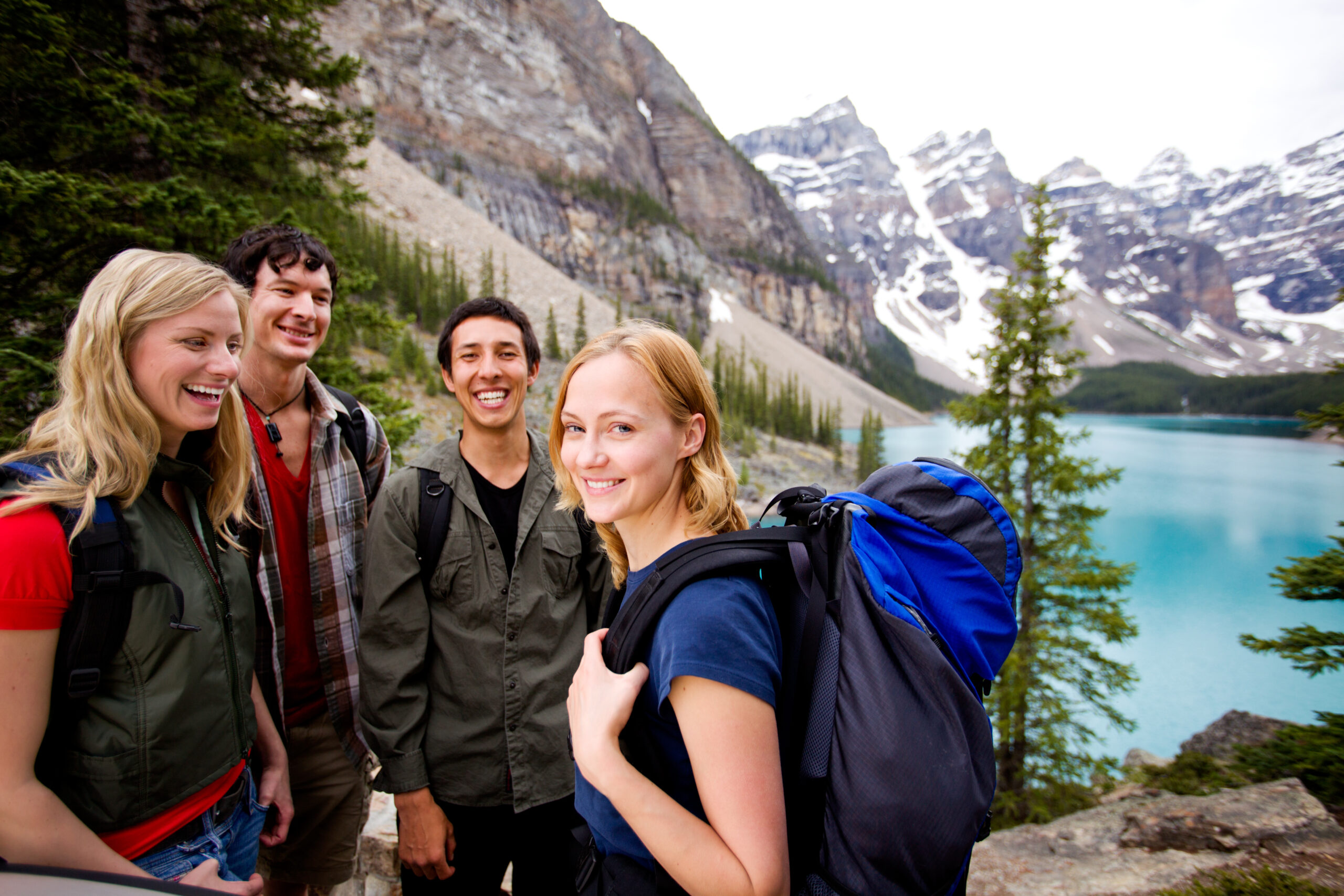
A group of friends on a hiking / camping trip in the mountains
How to Prevent Hiking Injuries in Calgary
Whether you're planning a short walk through Fish Creek Provincial Park or a full-day hike in Kananaskis Country or Banff National Park, proper preparation can significantly reduce your risk of injury. Most hiking injuries occur because of overuse, poor conditioning, inadequate footwear, or fatigue—not because of the trail itself.
Following these preventative strategies can help you stay safe and enjoy Calgary's hiking season with confidence.
1. Build Strength Before Hiking Season
Strengthening your muscles before hiking season helps prepare your body for uneven terrain, steep climbs, and long descents. Focus on building strength in your hips, glutes, core, calves, and ankles to improve stability and reduce your risk of injury.
- Squats and lunges
- Step-ups
- Single-leg balance exercises
- Calf raises
- Core strengthening exercises
2. Wear Proper Hiking Footwear
Supportive hiking boots or trail shoes provide better traction, ankle support, and shock absorption on uneven terrain. Replace worn footwear regularly and choose shoes that fit properly to help prevent blisters, ankle sprains, and overuse injuries.
3. Increase Hiking Distance Gradually
Avoid dramatically increasing your hiking distance or elevation gain from one outing to the next. Gradually progressing your mileage allows your muscles, joints, and cardiovascular system to adapt while reducing the risk of overuse injuries.
4. Warm Up Before You Hit the Trail
Taking five to ten minutes to warm up before hiking prepares your muscles and improves mobility.
- Leg swings
- Walking lunges
- Ankle circles
- Hip openers
- Bodyweight squats
5. Use Trekking Poles on Steep Terrain
Trekking poles improve balance while reducing stress on your knees and ankles during long climbs and descents. They also help distribute the workload between your upper and lower body, making challenging hikes less physically demanding.
6. Stay Hydrated and Take Regular Breaks
Fatigue and dehydration increase the likelihood of poor movement patterns, muscle cramps, and loss of concentration. Drink water regularly, fuel your body with nutritious snacks during longer hikes, and take short breaks before exhaustion sets in.
7. Listen to Your Body
Minor muscle soreness is normal after a challenging hike, but persistent or sharp pain should never be ignored. If pain begins to change the way you walk or continues after your hike, stop hiking and seek assessment before the problem becomes more serious.
Early physiotherapy treatment can often prevent a minor injury from becoming a long-term problem, helping you return to Calgary's trails safely and confidently.
Why Early Physiotherapy Can Help You Get Back on the Trail
Many hikers try to "walk off" pain after an injury, hoping it will improve with rest alone. Unfortunately, delaying treatment can allow minor problems to become chronic conditions that take much longer to recover from.
Early physiotherapy focuses on identifying the underlying cause of your pain, reducing inflammation, restoring mobility, and developing a personalized rehabilitation plan that helps you return to hiking safely.
Treatment may include:
- Manual therapy to improve joint mobility
- Individualized exercise programs to restore strength and flexibility
- Gait and movement assessment
- Balance and proprioception training
- Dry needling, shockwave therapy, or other evidence-based treatments when appropriate
- Education on hiking mechanics, footwear, and injury prevention
Whether you're recovering from an ankle sprain, knee pain, Achilles tendinopathy, plantar fasciitis, or a lower back strain, early intervention can:
- Reduce pain and improve mobility
- Speed up your recovery
- Lower the risk of re-injury
- Restore confidence on uneven terrain
- Help you return to hiking sooner
If hiking pain is preventing you from enjoying Calgary's incredible trail network, booking a physiotherapy assessment early can help you recover faster and get back to doing what you love.
Frequently Asked Questions About Hiking Injuries in Calgary
Ankle sprains are the most common hiking injury in Calgary due to uneven terrain, loose rocks, steep descents, and changing trail conditions. Knee pain, Achilles tendon injuries, plantar fasciitis, and lower back strains are also frequently seen, particularly during the busy summer hiking season.
Minor muscle fatigue after a hike is normal, but sharp or persistent pain should not be ignored. Continuing to hike through pain can worsen the injury and increase recovery time. If your pain changes the way you walk or persists after your hike, it's best to stop hiking and seek assessment.
You should consider seeing a physiotherapist if your pain lasts longer than a few days, swelling continues to increase, you're unable to bear weight comfortably, or the injury keeps returning each time you hike. Early treatment often leads to a faster recovery and reduces the risk of long-term problems.
Yes. Physiotherapy can identify muscle imbalances, movement restrictions, weakness, and poor biomechanics that increase your risk of injury. A personalized exercise program can improve strength, flexibility, balance, and endurance to help you hike more safely and confidently.
Recovery depends on the type and severity of the injury. Mild muscle strains or ankle sprains may improve within two to six weeks, while tendon injuries and plantar fasciitis often require several months of progressive rehabilitation. Early treatment generally leads to better outcomes.
Yes. Trekking poles improve stability, reduce stress on your knees during downhill hiking, and help distribute effort between your upper and lower body. They can be particularly helpful on longer hikes or trails with significant elevation changes.
Preparing your body before hiking is one of the best ways to prevent injury. Strength training, proper warm-ups, supportive footwear, gradual increases in hiking distance, staying hydrated, and using appropriate equipment all help reduce the risk of common hiking injuries.
Why Choose Caring Hands Physiotherapy in Calgary
Whether you've injured yourself hiking in Kananaskis, Banff, Canmore, or on Calgary's local pathways, our experienced physiotherapists can help you recover safely and return to the trails with confidence.
Why Hikers Choose Us
 Experienced physiotherapists treating hiking and outdoor activity injuries
Three convenient Calgary clinics: Country Hills, Falconridge, and Beddington
Direct billing to most insurance providers
Evening and Saturday appointments available
Multilingual care (English, Punjabi, Hindi, and more)
Personalized rehabilitation programs to help you return to hiking safely
Book Your Hiking Injury Assessment
Don't let pain keep you off the trails. Whether you're dealing with an ankle sprain, knee pain, Achilles tendon irritation, plantar fasciitis, or lower back pain, early physiotherapy can help speed recovery and reduce the risk of long-term problems.
Book an appointment online or contact the Caring Hands Physiotherapy clinic nearest you to get started.
