
Back pain can make everyday activities—from sitting at a desk and sleeping comfortably to working, exercising and staying active—more difficult. For some people, muscle tension, stiffness and soreness are an important part of what they are experiencing. In these situations, massage therapy may help reduce muscular tension, improve comfort and support easier movement.
But back pain has many possible causes, and massage therapy isn't the right approach for every situation. Understanding when massage may help, when physiotherapy assessment may be more appropriate, and when the two can work together can help you make a more informed decision about your care.
At Caring Hands Physiotherapy in Calgary, registered massage therapists and physiotherapists provide care across our Beddington, Country Hills and Falconridge clinics, allowing treatment to be matched to your symptoms, goals and individual needs.
Quick Answer:
Can Massage Therapy Help Back Pain?
Yes, massage therapy may help some types of back pain, particularly when muscle tension, tightness, stiffness or activity-related soreness is contributing to your discomfort.
Massage therapy works primarily with muscles and other soft tissues. Treatment may help reduce muscular tension, promote relaxation and make movement feel more comfortable. However, persistent, recurring or injury-related back pain may require a broader assessment to understand what is contributing to the problem.
If you're unsure whether massage therapy or physiotherapy is more appropriate, the nature of your symptoms, how they started and how they affect your movement and daily activities can help determine the best place to start.
How Can Massage Therapy Help With Back Pain?
Massage therapy uses hands-on techniques to work with muscles and other soft tissues that may be tight, tense or sore. For people whose back discomfort has a significant muscular component, treatment may help decrease tension and improve overall comfort.
Massage may also help people feel more relaxed and comfortable moving after periods of prolonged sitting, repetitive activity, exercise or physical work.
The goal isn't simply to “massage where it hurts.” A registered massage therapist considers the location and nature of your symptoms, activities that may be contributing to them and the surrounding muscles that may also be involved.
Reducing Muscle Tension and Tightness
Muscles of the lower, middle and upper back can become tense or uncomfortable following prolonged positions, repetitive movements, physical activity or changes in normal activity levels.
Massage techniques can be used to work with these tissues and may temporarily reduce feelings of tightness or muscular discomfort.
Improving Comfort and Movement
When muscles feel stiff or guarded, normal movements such as bending, turning or reaching can feel uncomfortable.
Reducing muscular tension may make movement feel easier for some people. Where significant movement restriction, weakness or recurring pain is present, however, physiotherapy assessment may be useful to examine movement and function more closely.
Supporting Relaxation and Recovery
Back discomfort and muscle tension can sometimes occur alongside physical and mental stress. Massage therapy may promote relaxation while addressing sore or tense muscles.
For active individuals, massage may also form part of a broader recovery strategy following exercise, sport or physically demanding work.
Massage Therapy
30-minute massage
$60-$85
----------------------
45-minute massage
$80-$100
----------------------
60-minute massage
$100-$120
----------------------
90-minute massage
$145-$165
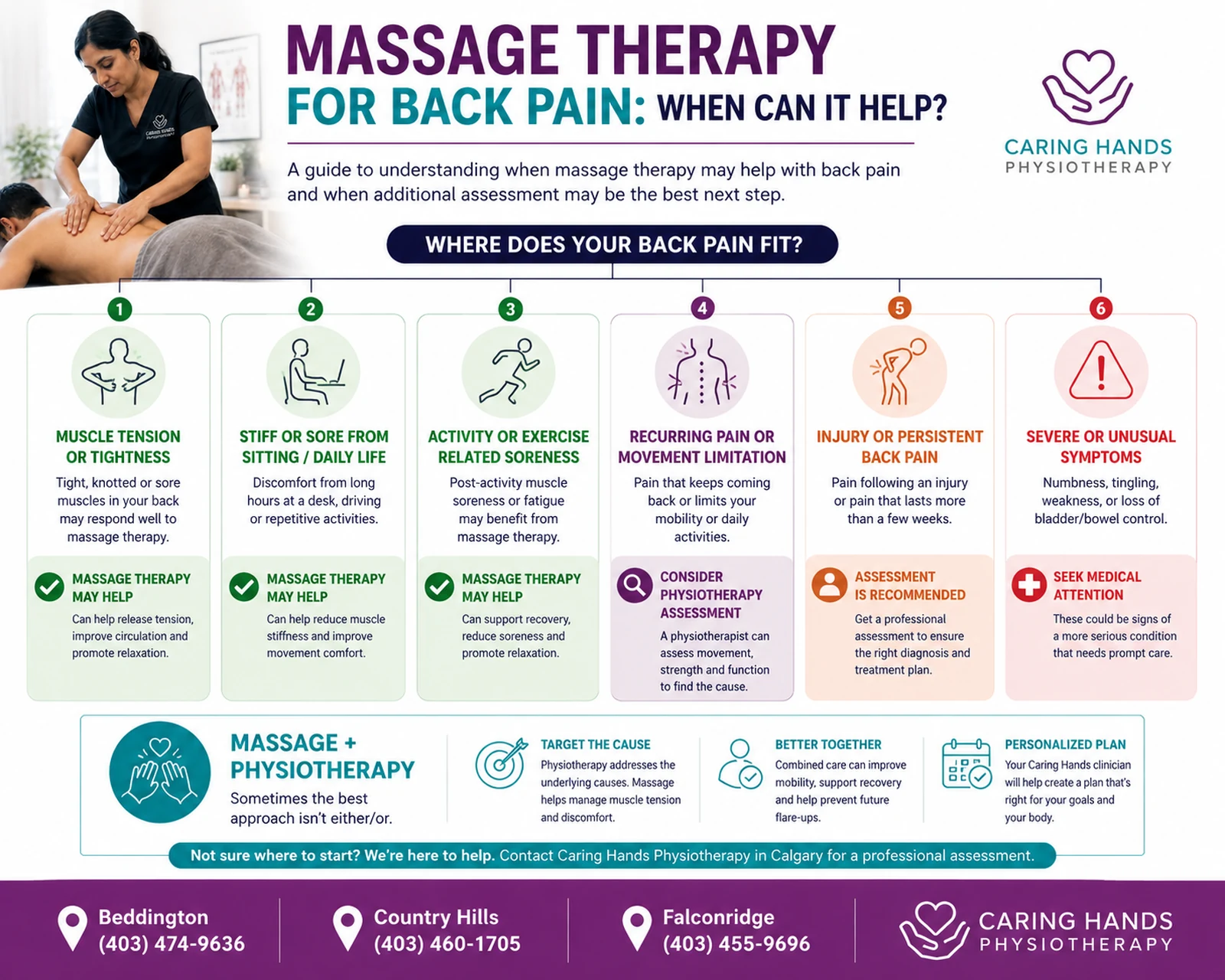
Not every type of back pain needs the same approach. Massage therapy may be useful when muscle tension, stiffness or soreness is involved, while persistent pain, injury or significant movement limitations may benefit from further assessment.
What Types of Back Pain May Respond to Massage Therapy?
Back pain isn't a single condition. Where symptoms are predominantly muscular, massage therapy may be one option for helping manage discomfort.
Your massage therapist will consider your symptoms and health history before treatment and adjust techniques and pressure according to your comfort and needs.
Lower Back Muscle Tension and Tightness
The lower back is a common area for muscular tightness and soreness. Long periods of sitting, repetitive activity, physical work, exercise or sudden increases in activity can all contribute to uncomfortable muscles around the lower back and hips.
Massage therapy may help reduce this muscular tension and improve comfort. Persistent lower back pain, particularly when it repeatedly limits movement or activity, may warrant physiotherapy or medical assessment.
Upper and Mid-Back Tension
Muscles around the upper back and shoulder blades can become uncomfortable following prolonged desk work, driving or other sustained positions.
Massage therapy can address tense or sore muscles through the upper and mid-back and may be particularly helpful when symptoms feel muscular and are associated with prolonged positions or repetitive activities.
Back Discomfort From Sitting and Desk Work
Extended sitting can contribute to stiffness and muscular discomfort, especially when people remain in one position for long periods.
Massage may help address the resulting muscular tension, while changes to movement habits, workstation setup and regular activity can also be important for managing recurring symptoms.
Exercise and Activity-Related Muscle Soreness
Exercise, sports, yard work or physically demanding jobs can leave the muscles of the back feeling sore or fatigued.
Massage therapy may help with comfort and relaxation during recovery. New or significant pain following an injury, however, should not automatically be assumed to be ordinary muscle soreness.
What Happens During Massage Therapy for Back Pain?
Your appointment should begin with a discussion about your symptoms, health history and what you hope to achieve from treatment. Your massage therapist may ask when the discomfort began, where you feel it and which activities make it better or worse.
Treatment is then adapted to your individual needs. Depending on the areas involved, your therapist may work with muscles around the lower back, hips, upper back or other related areas rather than concentrating exclusively on the point where you feel discomfort.
Pressure and techniques should be adjusted according to your comfort and treatment goals. Communication with your therapist is important throughout the session—massage does not need to be excessively painful to be effective.
After treatment, your therapist may discuss your response and whether additional treatment, self-management strategies or assessment by another healthcare professional may be appropriate.
What Type of Massage Is Used for Back Pain?
There isn't one single massage technique that is best for every person with back pain. The appropriate approach depends on your symptoms, comfort level and treatment goals.
Therapeutic Massage
Therapeutic massage uses techniques selected to address areas of muscular tension, tightness and discomfort. Treatment can be adapted in both pressure and technique depending on how sensitive or tense an area feels.
Deep Tissue Massage
Deeper pressure may be appropriate for some people and some areas of muscular tightness, but deeper isn't automatically better.
The appropriate amount of pressure should be based on your comfort and clinical presentation rather than the assumption that massage must hurt to produce a benefit.
Trigger Point and Soft-Tissue Techniques
Massage therapists may use focused techniques on specific areas of muscular tension or tenderness as part of a broader treatment.
The exact techniques used are less important than selecting an approach appropriate for your symptoms and adjusting treatment based on how you respond.
When Is Massage Therapy Not Enough for Back Pain?
This is one of the most important distinctions when choosing treatment.
Massage therapy primarily addresses muscles and other soft tissues. If your back pain repeatedly returns, significantly restricts movement, follows an injury or is accompanied by neurological symptoms, a broader assessment may be appropriate.
Physiotherapists assess factors such as movement, mobility, strength, function and recovery following injury. Depending on the findings, physiotherapy treatment may include exercise, education, manual therapy and a progressive rehabilitation plan.
Massage can still sometimes complement that treatment by helping manage muscular tension and discomfort.
Massage Therapy vs Physiotherapy for Back Pain: Which Should You Choose?
A simple way to think about the difference is that massage therapy focuses primarily on muscles and soft tissues, while physiotherapy takes a broader approach to movement, function and rehabilitation.
Massage may be a reasonable starting point when your symptoms mainly involve muscular tension, tightness or soreness.
Physiotherapy may be more appropriate when pain is associated with an injury, keeps returning, restricts movement or activity, or when you need a structured rehabilitation program.
Sometimes the answer isn't one or the other. Depending on your individual needs, massage therapy and physiotherapy can be complementary parts of your care.
We've created a detailed guide explaining the differences, including situations where each treatment may be appropriate:
Physiotherapy vs Massage Therapy for Back Pain in Calgary: Which Is Right for You?
Can Massage Therapy and Physiotherapy Work Together?
Yes. For some people with back pain, massage therapy and physiotherapy can complement one another because they address different aspects of care.
Massage therapy may help manage muscle tension, tightness and soreness, while physiotherapy can take a broader look at movement, strength, mobility, function and rehabilitation.
For example, someone recovering from back pain may use physiotherapy to work on movement, strengthening and a progressive return to normal activity, while massage therapy helps address muscular tension or discomfort along the way.
This does not mean everyone with back pain needs both treatments. Some people may benefit from massage therapy alone, while others may be better suited to physiotherapy. The appropriate approach depends on your symptoms, goals and assessment findings.
One advantage of receiving care at Caring Hands is having access to both registered massage therapy and physiotherapy within the same clinic environment, making it easier to choose or coordinate services when appropriate.
Choose your clinic:
How Many Massage Therapy Sessions Will I Need for Back Pain?
There is no single number of massage therapy sessions that is right for everyone with back pain. Treatment frequency depends on the nature of your symptoms, how long they have been present, your activity level and how you respond to treatment.
Someone experiencing temporary muscle tightness after unusual activity may have very different needs from someone who has been dealing with recurring muscular discomfort for several months.
Factors that may influence how often you receive massage therapy include:
- how long you have had your symptoms;
- the severity and frequency of the discomfort;
- your work, exercise and everyday activity demands;
- how your body responds following treatment; and
- whether massage therapy is being used on its own or alongside physiotherapy or another form of care.
Rather than committing to an arbitrary number of appointments, your massage therapist can reassess how you are responding and adjust the treatment plan accordingly.
How Much Does Massage Therapy for Back Pain Cost in Calgary?
The cost of massage therapy in Calgary varies depending on the length of the appointment, the clinic and the type of treatment provided. Many clinics offer several appointment lengths, allowing treatment time to be matched to individual needs.
If you have extended health benefits, your plan may cover some or all of the cost of treatment by an eligible registered massage therapist. Coverage limits, referral requirements and reimbursement rules vary between insurance plans.
Caring Hands has created a detailed guide covering massage therapy pricing in Calgary, typical appointment costs and insurance considerations so you can understand what to expect before booki
How Much Does Massage Therapy Cost in Calgary? 2026 Pricing Guide
Is Massage Therapy Covered by Insurance in Calgary?
Many extended health benefit plans provide coverage for massage therapy performed by an eligible registered massage therapist. However, the amount of coverage and the requirements for reimbursement vary between insurance providers and individual benefit plans.
Depending on your plan, massage therapy coverage may include:
- an annual maximum for massage therapy;
- a maximum amount covered per appointment;
- requirements regarding the massage therapist's registration or credentials; and
- in some cases, a physician's referral or other documentation.
Before your appointment, it is a good idea to check the details of your individual benefits plan so you understand your available coverage and any requirements that may apply.
For more information about treatment costs and insurance considerations, see our How Much Does Massage Therapy Cost in Calgary? 2026 Pricing Guide.
Massage Therapy for Back Pain at Caring Hands Physiotherapy in Calgary
If muscle tension, tightness or soreness is contributing to your back discomfort, registered massage therapy may help improve comfort and support easier movement.
Caring Hands Physiotherapy provides massage therapy and physiotherapy at three Calgary locations. Having both services available gives patients access to different treatment options depending on their symptoms, goals and individual needs.

Book Your Back Pain Appointment
Choose Your Caring Hands Calgary Clinic
Massage therapy appointments are available. Choose the Caring Hands Location most convenient for you.
Frequently Asked Questions About Massage Therapy for Back Pain
Back pain and massage therapy often raise questions about which treatment to choose, what to expect and when another type of assessment may be appropriate. Here are answers to some of the most common questions about massage therapy for back pain in Calgary.
Massage therapy may help when lower back discomfort involves muscle tension, tightness or soreness. Because lower back pain can have many different causes, persistent, recurring or injury-related symptoms may benefit from physiotherapy or medical assessment.
Massage therapy may be helpful when back discomfort involves muscular tension, tightness, stiffness or soreness. However, back pain can have many causes. Severe, worsening or unusual symptoms should be appropriately assessed rather than assumed to be muscular.
Consider physiotherapy when back pain is limiting movement or everyday activities, recurring, affecting work or exercise, or requiring rehabilitation after an injury. A physiotherapist can assess how your symptoms are affecting movement and function and develop an individualized treatment plan.
Deeper pressure may be useful for some people experiencing muscular tightness, but deep tissue massage isn't automatically more effective. The appropriate amount of pressure depends on your symptoms, sensitivity, comfort and treatment goals.
Yes. Massage therapy may help address muscular tension and soreness while physiotherapy focuses more broadly on movement, mobility, strength, function and rehabilitation. Whether you need one service or both depends on your individual symptoms and goals.
Many extended health benefit plans include massage therapy coverage, but annual maximums, per-visit limits and eligibility requirements vary between plans. Check your individual benefits before treatment if insurance reimbursement is important to you.
Massage therapy may be appropriate when muscle tension, tightness or soreness is the primary concern. Physiotherapy may be more appropriate for an injury, recurring pain, significant movement limitations or rehabilitation needs.
In some situations, the two services can complement one another.
Some people may experience temporary tenderness or soreness following massage, particularly after more intensive treatment. Treatment should remain within an appropriate level of comfort. Tell your massage therapist if pressure or a particular technique significantly increases your symptoms.
There isn't one type of massage that is best for everyone with back pain. Therapeutic massage, deeper pressure and focused soft-tissue techniques may all be used depending on your symptoms, comfort and treatment goals. Your massage therapist should adapt the treatment to your individual needs and response.
Massage therapy may be appropriate when symptoms appear predominantly muscular, such as tightness, tension or activity-related soreness. New pain following an injury, significant movement restriction, neurological symptoms or severe unexplained pain should be appropriately assessed rather than automatically treated with massage.
You can generally book massage therapy without a physician referral. However, some extended health insurance plans may require a referral or other documentation before reimbursing treatment, so it is important to check the requirements of your individual benefits plan.
Not Sure Whether Massage Therapy Is Right for Your Back Pain?
You don't have to determine the right treatment based on symptoms alone. Caring Hands Physiotherapy offers registered massage therapy and physiotherapy in Calgary, giving you access to different treatment options depending on your individual needs.
Whether you're dealing with muscle tension and stiffness, recovering after physical activity or experiencing back pain that continues to interfere with movement and everyday life, our team can help you determine an appropriate next step.
Massage therapy appointments are available at our Beddington, Country Hills and Falconridge clinics.
Book Your Massage Therapy Appointment