
Back pain is one of the most common health concerns affecting adults in Calgary. Whether it develops after lifting something heavy, spending long hours at a desk, participating in sports, or gradually over time, back pain can interfere with work, sleep, exercise, and everyday life.
The encouraging news is that most back pain can be successfully treated without surgery. Physiotherapy is widely recognized as one of the most effective first-line treatments because it focuses on identifying the underlying cause of your symptoms, reducing pain, restoring movement, and helping prevent future episodes.
At Caring Hands Physiotherapy, every patient receives a comprehensive assessment to understand how their back pain developed and what factors are contributing to their symptoms. Your physiotherapist evaluates your movement, strength, posture, flexibility, and functional limitations before developing a personalized treatment plan designed specifically for your condition, lifestyle, and recovery goals.
In this comprehensive guide, you'll learn about the most common causes of back pain, when to seek professional treatment, how physiotherapy can help, expected recovery timelines, exercises that support healing, and practical strategies to reduce the risk of future back problems.
If you're looking for information about appointment fees, insurance coverage, and direct billing, be sure to read our comprehensive guide to Physiotherapy Costs for Back Pain in Calgary.
Quick Answer: Can Physiotherapy Help Back Pain?
Physiotherapy is one of the most effective first-line treatments for most types of back pain. After identifying the underlying cause of your symptoms, your physiotherapist develops a personalized treatment plan that may include hands-on therapy, targeted exercises, movement education, and posture correction. Many patients begin to notice improvement within the first few treatment sessions, although recovery time varies depending on the underlying condition, its severity, and your individual recovery goals.
Understanding Back Pain
Back pain is one of the leading causes of pain and disability worldwide, affecting people of all ages, occupations, and activity levels. While the symptoms can range from a mild ache to severe pain that limits movement, most back pain is not caused by a serious medical condition and responds well to conservative treatment such as physiotherapy.
Many people assume that back pain always means there is damage to the spine. In reality, the majority of cases involve muscles, joints, ligaments, or discs that have become irritated, strained, or overloaded. Identifying the true source of your symptoms is the first step toward choosing the most effective treatment.
At Caring Hands Physiotherapy, every assessment is designed to determine not only where your pain is located, but why it developed. Understanding the underlying cause allows us to create a personalized treatment plan focused on reducing pain, restoring movement, improving strength, and helping prevent future episodes.
Did You Know:
Up to 80% of adults will experience back pain at some point in their lives making it one of the leading causes of disability worldwide. Fortunately, most cases improve with conservative treatment, including physiotherapy, exercise, and education.
Back Pain Physiotherapy
Initial Assessment & Treatment
$115
Follow-up Treatment
One Body Area
Understanding Back Pain at a Glance
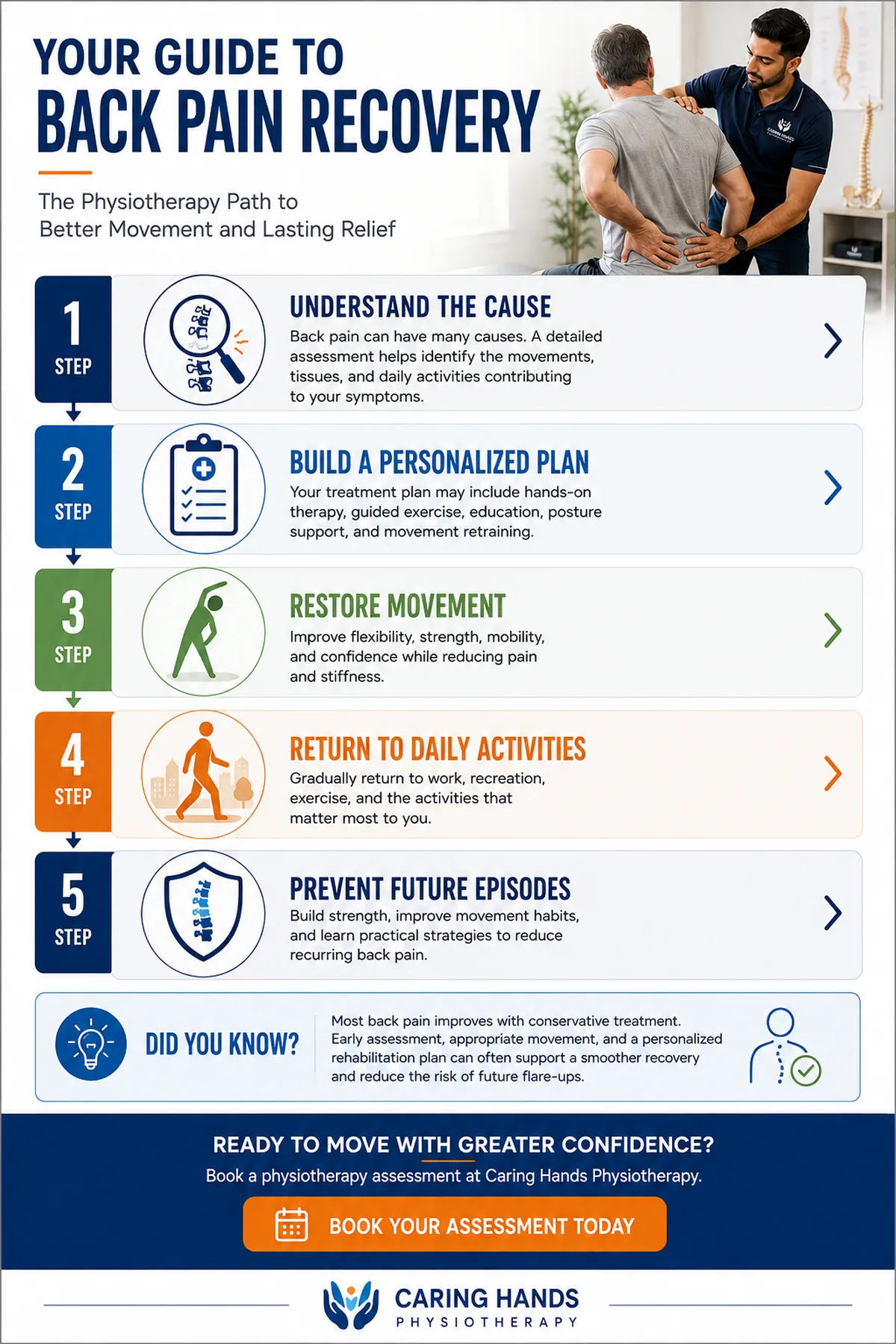
If you're looking for a quick overview, the infographic below highlights some of the most common causes of back pain, what happens during a physiotherapy assessment, and the key steps involved in recovery. While every condition is unique, understanding how back pain develops and how physiotherapy helps can make it easier to take the first step toward lasting relief.
This infographic summarizes the patient journey—from understanding the causes of back pain to assessment, treatment, recovery, and long-term prevention.
When Should You See a Physiotherapist for Back Pain?
While many episodes of back pain improve within a few days, persistent or worsening symptoms should not be ignored. Early assessment by a physiotherapist can often reduce recovery time, restore normal movement, and help prevent an acute problem from becoming chronic.
You should consider booking a physiotherapy assessment if your back pain:
• Lasts longer than one to two weeks without improvement.
• Returns repeatedly or has become a recurring problem.
• Interferes with work, sleep, exercise, or everyday activities.
• Pain spreads into your buttock, leg, or foot.
• Is accompanied by numbness, tingling, or weakness.
• Developed after a sports injury, fall, or lifting incident.
• Continues to worsen despite rest or home treatment.
Seeking treatment early often leads to a quicker recovery, fewer treatment sessions, and a faster return to work, recreation, and the activities you enjoy. At Caring Hands Physiotherapy, your assessment focuses on identifying the underlying cause of your symptoms—not simply treating the pain. By understanding why your condition developed., we can create a personalized treatment plan that helps reduce pain, restore function, and lower the risk of future episodes.

Ready to Get Relief from Back Pain?
Book at the Caring Hands Clinic Nearest You
Same-week appointments are often available. Direct billing is offered for many insurance providers.
How Physiotherapy Helps Back Pain
Physiotherapy is one of the most effective treatments for most types of back pain because it focuses on identifying and treating the underlying cause—not simply relieving symptoms. Every treatment plan begins with a comprehensive assessment to understand how your pain developed, what structures are involved, and which movements or activities are contributing to your condition.Every treatment plan is tailored to the individual because no two cases of back pain are exactly the same.
Your physiotherapist will then develop a personalized rehabilitation plan designed to reduce pain, restore movement, improve strength, and help prevent future episodes of back pain.
Comprehensive Assessment
Your first appointment includes a detailed review of your symptoms, medical history, posture, movement patterns, flexibility, strength, and functional limitations. This assessment allows your physiotherapist to accurately identify the underlying cause of your back pain and recommend the most appropriate treatment plan, diagnose the source of your back pain and recommend the most appropriate treatment plan.
Hands-On Manual Therapy
Hands-on manual therapy techniques may be used to improve joint mobility, reduce muscle tension, relieve pain, and restore normal movement. Depending on your condition, treatment may include joint mobilization, soft tissue therapy, myofascial release, or other evidence-informed techniques recommended by your physiotherapist.
Targeted exercises are one of the most important parts of recovery. Your physiotherapist will prescribe exercises that improve flexibility, restore strength, increase stability, and help you return safely to work, sport, and the activities you enjoy.
Education and Prevention
Understanding your condition is an important part of long-term recovery. You'll receive practical advice on posture, lifting techniques, workplace ergonomics, activity modification, and home exercises to reduce the risk of future back pain.
Lower Back Pain
Lower back pain is the most common type of back pain treated by physiotherapists. It affects the lumbar spine, which supports much of your body's weight while allowing you to bend, lift, twist, walk, and perform everyday activities, lift, twist, and move throughout the day. Because of these demands, the lower back is particularly vulnerable to injury, muscle strain, joint irritation, and disc problems.
Lower back pain may begin suddenly after lifting something heavy or develop gradually from prolonged sitting, repetitive movements, poor posture, or reduced physical activity. While the symptoms can vary from a dull ache to sharp pain that limits movement, most cases improve with appropriate physiotherapy, an individualized exercise program, and gradual return to normal activity.
Common Symptoms of Lower Back Pain
Lower back pain affects everyone differently, but common symptoms include:
• Pain across the lower back or one side of the spine.
• Stiffness after sitting or getting out of bed.
• Pain when bending, lifting, or twisting.
• Muscle spasms or tightness.
• Difficulty standing or walking for long periods.
• Pain that spreads into the buttock or leg.
• Pain that may radiate into the buttock or leg.
How Physiotherapy Can Help Lower Back Pain
Treatment begins with identifying the specific cause of your symptoms. Depending on your assessment findings, your physiotherapist may recommend manual therapy, individualized exercises, mobility training, posture correction, activity modification, and education to improve movement patterns and reduce the likelihood of future flare-ups. The goal is not only to reduce pain but also to restore strength, improve function, and help prevent future episodes of lower back pain. Learn more about the causes, symptoms, and treatment options in our complete Lower Back Pain Guide.
Sciatica
Sciatica is one of the most common causes of pain that travels from the lower back into the buttock and down the leg. Rather than being a condition itself, sciatica describes symptoms caused by irritation or compression of the sciatic nerve—the largest nerve in the body.
Depending on the severity of the irritation, symptoms may range from mild discomfort to sharp, shooting pain that affects walking, sitting, sleeping, or everyday activities. While sciatica can be alarming, many people recover successfully with conservative treatment, including physiotherapy.
Common Symptoms of Sciatica
Sciatica symptoms vary from person to person but commonly include:
• Pain that radiates from the lower back into the buttock or leg.
• Burning, sharp, or shooting pain.
• Tingling or "pins and needles."
• Numbness in the leg or foot.
• Muscle weakness.
• Pain that becomes worse when sitting for prolonged periods.
What Causes Sciatica?
Sciatica occurs when the sciatic nerve becomes irritated or compressed. Sciatica occurs when the sciatic nerve becomes irritated or compressed. Several conditions can contribute to this, and identifying the underlying cause is an important part of choosing the most appropriate treatment.:
• Herniated or bulging discs.
• Spinal stenosis.
• Age-related changes in the spine.
• Muscle tightness, including piriformis syndrome.
• Sports injuries.
• Trauma following a fall or motor vehicle accident.
An accurate assessment is important because treatment depends on identifying the underlying cause rather than simply treating the symptoms.
Can Physiotherapy Help Sciatica?
Yes. Physiotherapy is often one of the most effective treatments for sciatica. Following comprehensive assessment, your physiotherapist develops a personalized rehabilitation program that may include manual therapy, nerve gliding exercises, stretching, strengthening exercises, posture correction, and education to reduce pressure on the irritated nerve.
The goal is to relieve pain, restore normal movement, improve strength, and reduce the risk of future flare-ups.
Herniated Disc
A herniated disc, sometimes referred to as a slipped or ruptured disc, occurs when the soft inner portion of a spinal disc pushes through its tougher outer layer. This can irritate nearby nerves and cause pain, numbness, tingling, or weakness, most commonly in the lower back and leg.
Although the diagnosis may sound alarming, many herniated discs improve without surgery. With an accurate assessment and a structured rehabilitation program, physiotherapy can help reduce pain, improve movement, and support the body's natural healing process. Although the diagnosis may sound alarming, many herniated discs improve without surgery. With an accurate assessment and a structured rehabilitation program, physiotherapy can help reduce pain, improve movement, and support the body's natural healing process. Most people are able to return to their normal activities with appropriate treatment and rehabilitation.

Common Symptoms of a Herniated Disc
Symptoms depend on which spinal nerve is affected but commonly include:
• Lower back pain.
• Pain that spreads into the buttock or leg.
• Numbness or tingling.
• Muscle weakness.
• Pain that increases with coughing, sneezing, or prolonged sitting.
• Difficulty standing or walking comfortably.
What Causes a Herniated Disc?
A herniated disc may develop suddenly following a lifting injury or gradually over time as part of the natural aging process. Repetitive bending, twisting, prolonged sitting, poor lifting mechanics, and physically demanding work can all increase stress on the spinal discs.
Not every herniated disc causes symptoms. Many people have disc changes visible on MRI without experiencing any pain. This is why a thorough clinical assessment is often more important than imaging alone. Not every herniated disc causes symptoms. Many people have disc changes visible on MRI without experiencing pain. This is why a thorough clinical assessment is often more important than imaging findings alone.
Can Physiotherapy Help a Herniated Disc?
Yes. Physiotherapy is commonly recommended as one of the first treatments for many herniated discs. Your rehabilitation program may include manual therapy, guided exercises, mobility training, core strengthening, posture correction, and education to reduce pressure on the affected nerve and improve spinal function.
Treatment focuses on helping you return safely to work, recreation, and everyday activities while reducing the risk of future flare-ups and improving long-term spinal function.
Upper Back Pain
Upper back pain affects the area between the base of the neck and the bottom of the rib cage (thoracic spine). Although it is generally less common than lower back pain, it can significantly affect posture, breathing, work performance, sleep, and everyday comfort.
Many people develop upper back pain from prolonged sitting, computer work, poor posture, repetitive lifting, muscle tension related to stress, or sports injuries. Motor vehicle accidents and overuse can also contribute. Fortunately, most cases respond very well to physiotherapy, particularly when treatment begins early.
Common Symptoms of Upper Back Pain
Upper back pain can present in several different ways depending on the underlying cause. Common symptoms include:
• Aching or stiffness between the shoulder blades.
• Pain when turning or twisting the upper body.
• Muscle tightness across the shoulders and upper back.
• Pain that worsens after prolonged sitting.
• Difficulty maintaining good posture.
• Difficulty taking a deep breath because of upper back stiffness.
What Causes Upper Back Pain?
Upper back pain is commonly related to muscle strain, poor posture, repetitive workplace activities, prolonged computer use, sports injuries, or reduced mobility of the thoracic spine. In some cases, pain may also originate from the neck or shoulder and be felt between the shoulder blades.
A comprehensive physiotherapy assessment helps identify the source of your symptoms so treatment can focus on correcting the underlying problem rather than simply relieving pain. Upper back pain is commonly related to muscle strain, poor posture, repetitive workplace activities, prolonged computer use, sports injuries, or reduced mobility of the thoracic spine. In some cases, pain may also originate from the neck or shoulder and be felt between the shoulder blades.
Because several conditions can produce similar symptoms, a physiotherapy assessment helps determine the true source of the pain before treatment begins.
How Physiotherapy Can Help Upper Back Pain
A comprehensive physiotherapy assessment helps identify the source of your symptoms so treatment can focus on correcting the underlying problem—not simply relieving pain. This approach often leads to better long-term results and helps reduce the risk of recurring episodes.
Muscle Strain
Muscle strains are one of the most common causes of back pain and can affect people of all ages and activity levels. They occur when muscle fibres or tendons are overstretched or torn, often during lifting, twisting, sudden movements, sports activities, or repetitive physical work. Although painful, most muscle strains recover well with appropriate treatment and an active rehabilitation program.
While muscle strains can be painful, most recover well with early physiotherapy, appropriate movement, and progressive strengthening. Remaining active within comfortable limits is usually more beneficial than prolonged bed rest, helping you recover more quickly and return to normal activities sooner.
Common Symptoms of a Back Muscle Strain
Symptoms of a muscle strain may include:
• Localized pain in the back.
• Muscle tightness or spasms.
• Pain when bending, lifting, or twisting.
• Tenderness over the injured muscle.
• Reduced flexibility.
• Difficulty performing everyday activities.
What Causes a Back Muscle Strain?
Muscle strains often result from sudden overload or repetitive stress. Common causes include improper lifting techniques, physically demanding work, sports injuries, poor conditioning, prolonged sitting, and weak core muscles that place additional strain on the back.
Although symptoms can be uncomfortable, most muscle strains improve significantly with an individualized rehabilitation program.
How Physiotherapy Helps Muscle Strains
Following a comprehensive assessment, your physiotherapist will develop a treatment plan focused on reducing pain, restoring flexibility, rebuilding strength, and helping you return safely to normal activities. Treatment may include manual therapy, stretching, progressive strengthening exercises, movement retraining, and education to reduce the risk of reinjury.
Poor Posture and Back Pain
Poor posture is one of the most common contributors to back pain, particularly among people who spend long hours sitting at a desk, driving, or using computers and mobile devices. While poor posture alone does not always cause pain, maintaining the same position for extended periods places increased stress on the muscles, joints, and supporting structures of the spine.
Over time, this added strain can lead to muscle fatigue, joint stiffness, reduced mobility, and recurring episodes of neck, upper back, or lower back pain. The good news is that posture-related back pain often responds very well to physiotherapy and simple changes to daily habits.
Signs Your Posture May Be Contributing to Back Pain
Common signs include:
• Pain that increases after sitting for long periods.
• Stiffness when standing after prolonged sitting.
• Rounded shoulders or a forward head posture.
• Frequent upper back or neck tension.
• Lower back discomfort at the end of the workday.
• Relief after stretching or moving around.
Improving Your Posture
Improving posture is about more than simply sitting up straight. Your physiotherapist will assess your movement patterns, workstation setup, flexibility, muscle strength, and daily activities to identify factors contributing to your symptoms.
Treatment may include posture education, ergonomic recommendations, strengthening exercises, mobility training, stretching, and practical strategies that fit naturally into your daily routine. Small improvements made consistently often produce significant long-term benefits.
Back Pain During Pregnancy
Back pain is extremely common during pregnancy as your body adapts to support your growing baby. Hormonal changes, weight gain, changes in posture, and a shifting centre of gravity place additional stress on the muscles, joints, ligaments, and pelvis.
Although back pain can be a normal part of pregnancy, it should not be accepted as something you simply have to live with. Physiotherapy provides safe, evidence-based treatment strategies that can reduce pain, improve mobility, and help you stay active and comfortable throughout your pregnancy.
Common Causes of Pregnancy-Related Back Pain
Several factors contribute to back pain during pregnancy, including:
• Hormonal changes that increase ligament flexibility.
• Increased stress on the pelvic joints and sacroiliac (SI) joints.
• A forward shift in your centre of gravity.
• Reduced core stability.
• Pelvic joint changes.
• Muscle fatigue from supporting your growing baby.
• Changes in sleeping position as pregnancy progresses.
Pregnancy-related back pain may also include pelvic girdle pain, which affects the joints and ligaments around the pelvis.
These changes are a normal part of pregnancy, but they can place additional stress on the lower back, hips, and pelvis. An individualized assessment helps determine which structures are contributing to your symptoms so treatment can be tailored to your needs.
How Physiotherapy Can Help During Pregnancy
Physiotherapy focuses on helping you stay as comfortable and active as possible throughout pregnancy. Following a comprehensive physiotherapy assessment, your physiotherapist may recommend gentle exercises, posture education, manual therapy, pelvic stabilization exercises, movement modification, and practical strategies for sitting, standing, lifting, sleeping, and caring for your growing family.
Every treatment plan is tailored to your stage of pregnancy, symptoms, comfort level, and individual goals, helping support both you and your baby's well-being.
Exercises for Back Pain
Exercise is one of the most effective treatments for most types of back pain and helps reduce the risk of future episodes. While short periods of rest may help immediately after some injuries, prolonged inactivity often leads to increased stiffness, muscle weakness, and a slower recovery. While rest may provide short-term relief during the first day or two after an injury, prolonged inactivity often leads to increased stiffness, muscle weakness, and a longer recovery.
The most effective exercises depend on the underlying cause of your back pain. A physiotherapist can identify which movements are likely to help your condition and which exercises should be modified or temporarily avoided during the early stages of recovery.
An individualized exercise program is one of the most important parts of successful physiotherapy treatment because it helps restore strength, improve flexibility, increase spinal stability, improve balance, and build confidence in movement.
Stretching Exercises
Gentle stretching can improve flexibility, reduce muscle tension, and restore normal movement. Depending on your condition, your physiotherapist may recommend stretches for the lower back, hips, hamstrings, hip flexors, or surrounding muscles that contribute to back pain. Stretching should always be comfortable and never force painful movements.
Strengthening Exercises
Strengthening the muscles that support your spine helps improve stability and reduce stress on the back during everyday activities. Treatment often focuses on the core, gluteal muscles, hips, and lower back using exercises that gradually progress as your recovery improves.
Mobility Exercises
Mobility exercises help restore normal movement of the spine and surrounding joints. Improving mobility can reduce stiffness, improve posture, and make everyday movements such as bending, reaching, lifting, and walking more comfortable.
Walking and Staying Active
For many people with back pain, gentle walking is one of the safest and most effective activities during recovery. Remaining active within your comfort level helps maintain circulation, reduces stiffness, supports healing, and builds confidence as your symptoms improve.
If an activity significantly increases your pain, stop and consult your physiotherapist before continuing. Your exercise program should challenge your body without causing a significant increase in symptoms.
Exercise Safety Tip:
Although exercise is one of the most effective treatments for back pain, not every exercise is appropriate for every condition. If your pain is severe, spreads into your leg, is associated with numbness or weakness, or significantly worsens during exercise, stop and seek assessment from a physiotherapist or healthcare professional.
Preventing Future Back Pain
Although not every episode of back pain can be prevented, many cases are related to everyday habits that place unnecessary stress on the spine. Small lifestyle changes can significantly reduce your risk of recurring pain and help keep your back healthy for years to come.
Physiotherapy not only treats your current symptoms but also helps identify movement patterns, muscle imbalances, and daily activities that may increase your risk of future injury. By addressing these contributing factors, many people experience fewer flare-ups and greater confidence in their everyday movements.
Stay Active
Regular physical activity helps maintain muscle strength, flexibility, and spinal mobility. Walking, swimming, cycling, and strength training are all excellent ways to support long-term back health. Even short movement breaks throughout the day can make a meaningful difference if you spend long periods sitting.
Practice Safe Lifting
Many back injuries occur during everyday lifting rather than major accidents. Bend at your hips and knees, keep the object close to your body, avoid twisting while lifting, and ask for assistance when lifting heavy or awkward loads.
Improve Your Workstation
Poor workstation ergonomics are a common contributor to ongoing back pain, particularly if you spend several hours each day sitting at a desk. Position your chair, monitor, and keyboard so you can maintain a neutral spine, keep your feet flat on the floor, and avoid prolonged static postures. Small ergonomic adjustments combined with regular movement breaks can make a significant difference. Position your chair, monitor, and keyboard so you can maintain a neutral spine, keep your feet flat on the floor, and avoid prolonged static postures. Small ergonomic adjustments combined with regular movement breaks can make a significant difference.
Build Core Strength
Strong core muscles provide important support for your spine during lifting, walking, and everyday activities. A personalized strengthening program improves stability, reduces stress on the back, and lowers the likelihood of future injuries.
Listen to Your Body
Persistent stiffness, recurring discomfort, or pain that develops during everyday activities should not be ignored. Early assessment and treatment often prevent small problems from becoming long-term conditions that require more extensive rehabilitation.
How Long Does Recovery Take?
Recovery from back pain varies depending on the underlying cause, the severity of the condition, your overall health, and how soon treatment begins. While some people recover within a few weeks, others with more complex or long-standing conditions may require several months of rehabilitation.
Early assessment and an individualized physiotherapy program often help reduce recovery time and lower the risk of recurring episodes.
Acute Back Pain
Acute back pain caused by muscle strains, minor joint irritation, or lifting injuries often improves within two to six weeks. Remaining active, following your physiotherapist's recommendations, and performing your prescribed exercises all contribute to a faster recovery.
Chronic Back Pain
Back pain that has persisted for several months generally requires a longer rehabilitation program. Treatment focuses on improving movement, rebuilding strength, correcting contributing factors, and restoring confidence in daily activities. Recovery is often gradual, but many people experience meaningful improvements with a structured physiotherapy program.
What Can Affect Recovery?
Several factors influence how quickly you recover from back pain, including:
• The underlying cause of your symptoms.
• How long the pain has been present.
• Your overall health and activity level.
• Following your home exercise program.
• Returning to activity gradually.
• Receiving early assessment and treatment.
Every person heals differently, which is why a personalized treatment plan is an important part of successful recovery.
When Is Imaging Needed?
Many people assume they need an X-ray or MRI before beginning physiotherapy for back pain. In reality, most episodes of back pain can be accurately assessed through a detailed clinical examination without immediate imaging. Your physiotherapist uses your symptoms, medical history, physical examination, and movement assessment to determine whether imaging is necessary or whether treatment can begin safely without delay.
Current clinical guidelines recommend that imaging should only be used when the results are likely to change treatment decisions or when there are signs of a more serious underlying condition. For most people with mechanical back pain, early movement and physiotherapy are more beneficial than routine imaging.
When an X-ray May Be Recommended
X-rays are primarily used to evaluate the bones of the spine. They may be recommended following significant trauma, when a fracture is suspected, or to assess certain degenerative or arthritic changes. However, X-rays do not show muscles, ligaments, spinal discs, or nerves in detail and therefore are not routinely required for most cases of mechanical back pain.
When an MRI May Be Recommended
MRI scans provide detailed images of the spinal discs, nerves, muscles, and other soft tissues. Your healthcare provider may recommend an MRI if symptoms suggest significant nerve compression, persistent weakness, loss of sensation, or if your symptoms do not improve with appropriate conservative treatment. MRI findings are always interpreted alongside your clinical examination because many people have age-related changes visible on MRI without experiencing pain or disability.
When You Should Seek Immediate Medical Attention
Although uncommon, certain symptoms require urgent medical assessment. Seek immediate medical attention if you experience any of the following:
• Loss of bladder or bowel control.
• Numbness around the groin or saddle area.
• Progressive weakness in one or both legs.
• Severe back pain following significant trauma.
• Fever, unexplained weight loss, or back pain associated with a history of cancer.
• Pain accompanied by unexplained night sweats or feeling generally unwell.
These symptoms may indicate a more serious medical condition requiring prompt investigation. If you experience any of these warning signs, seek immediate medical care rather than attempting to self-manage your symptoms.
How Much Does Physiotherapy for Back Pain Cost in Calgary?
The cost of physiotherapy for back pain depends on several factors, including the complexity of your condition, whether this is your first appointment, and the type of treatment recommended by your physiotherapist. Most treatment plans begin with a comprehensive assessment followed by personalized follow-up sessions designed to help you recover safely and effectively.
Treatment costs vary depending on your assessment findings and the care plan that's right for you. To keep our pricing information accurate and up to date, we've created a dedicated Physiotherapy Pricing Guide that outlines current fees, what's included in each appointment, insurance information, direct billing, and answers to frequently asked questions.
Our complete pricing guide explains appointment fees, treatment options, insurance coverage, and what to expect during your visits—helping you make an informed decision before booking your physiotherapy assessment.
Frequently Asked Questions About Physiotherapy for Back Pain
If you still have questions about back pain, you're not alone. Below are answers to some of the most common questions our physiotherapists hear from patients in Calgary. If you don't see your question here, contact Caring Hands Physiotherapy to speak with our team or schedule a comprehensive assessment.
Yes. Physiotherapy is one of the most effective first-line treatments for most types of back pain. Treatment focuses on identifying the underlying cause of your symptoms, reducing pain, restoring movement, improving strength, and helping prevent future episodes.
For most people, gentle movement and staying active are more beneficial than prolonged bed rest. Your physiotherapist can recommend safe activities and exercises based on your condition.
Yes. Physiotherapy commonly helps reduce sciatic nerve irritation through individualized exercises, manual therapy, mobility training, and education designed to improve movement and reduce pressure on the affected nerve.
For many people, walking is one of the safest and most effective forms of exercise during recovery. It helps maintain mobility, improve circulation, and reduce stiffness without placing excessive stress on the spine.
The number of treatments varies depending on your diagnosis, severity of symptoms, recovery goals, and how your body responds to treatment. Your physiotherapist will discuss an individualized treatment plan after your assessment.
Many extended health insurance plans include physiotherapy coverage. Caring Hands Physiotherapy also offers direct billing for many insurance providers, making treatment more convenient for patients.
If your pain lasts more than a week or two, keeps returning, limits your daily activities, or radiates into your leg, it is a good idea to schedule a physiotherapy assessment.
The cost depends on the type of assessment and treatment required. We've created a comprehensive Physiotherapy Pricing Guide outlining current Calgary fees, what's included in each appointment, insurance information, and direct billing options.
Back pain can result from muscle strains, poor posture, repetitive movements, herniated discs, arthritis, sports injuries, heavy lifting, or prolonged sitting. A physiotherapy assessment helps identify the specific cause of your symptoms.
Recovery varies depending on the cause and severity of your condition. Many people improve within two to six weeks, while more complex conditions may require a longer rehabilitation program.
Recovery depends on the underlying cause and severity. Learn more in our Recovery Timeline section above.
Not usually. Most cases of back pain can be assessed without imaging. MRI is generally recommended only when symptoms suggest a more serious condition or when conservative treatment has not been successful.
See our When Is Imaging Needed? section for more information.
Poor posture can place additional stress on the muscles and joints of the spine, particularly during prolonged sitting or computer work. Improving posture and movement habits often helps reduce recurring back pain.
Yes. Physiotherapy focuses not only on relieving pain but also on improving strength, flexibility, posture, movement patterns, and lifestyle habits that reduce the likelihood of future injuries.
In many cases, yes. The right exercises can support recovery, while the wrong exercises may aggravate your symptoms. A physiotherapist can recommend an exercise program that is appropriate for your condition.
Massage therapy may help reduce muscle tension, tightness and soreness and improve comfort for some people with back pain. Depending on your symptoms, it may be used on its own or alongside physiotherapy as part of a broader treatment approach.
Learn more about when massage may be appropriate, what treatment involves and when further assessment may be helpful in our guide to Massage Therapy for Back Pain in Calgary.
Start Your Recovery from Back Pain Today
Back pain doesn't have to control your life. Whether your symptoms began recently or you've been living with persistent pain for months, early physiotherapy can help reduce pain, restore movement, and get you back to doing the things you enjoy.
Every assessment at Caring Hands Physiotherapy is designed to identify the underlying cause of your back pain—not simply treat the symptoms. Your personalized treatment plan focuses on reducing pain, improving strength and mobility, and helping prevent future flare-ups.
Book your physiotherapy assessment today and take the first step toward lasting back pain relief. Same-week appointments are often available.
Book at the Caring Hands Clinic Nearest You
Same-week appointments are often available. Direct billing is offered for many insurance providers.
Enter your text here...