
Why Can Pain Return?
Pain that improves and then comes back can be frustrating. You may feel like you are finally getting back to normal, only to notice the same back, neck, shoulder or joint pain returning when you increase your activity, get busy at work or return to exercise.
There isn't always one simple reason why pain keeps coming back. Changes in activity or workload, strength, mobility, movement patterns and recovery from a previous injury can all play a role. Understanding what may be contributing to recurring pain can help you decide whether it is time to have it assessed.
Quick Answer: Can Physiotherapy Help Back Pain?
Pain can improve and later return for many reasons. Recurring pain does not necessarily mean you have injured yourself again. Changes in activity, workload, strength, mobility and recovery may all contribute. If pain repeatedly returns, limits your normal activities or is not improving as expected, a physiotherapy assessment may help identify contributing factors and determine an appropriate next step.
Why Can Pain Return
Pain is influenced by many factors, so symptoms can settle even when some of the circumstances that contributed to the problem have not fully changed. You might feel better, become more active again and then notice symptoms returning as the demands on your body increase.
This does not automatically mean that a new injury has occurred. For some people, recurring symptoms may be associated with changes in activity or workload, reduced strength or conditioning, mobility, movement patterns or recovery following a previous injury.
The important point is that recurring pain is individual. Rather than assuming there is a single “root cause,” an assessment can look at your symptoms, movement, activity demands and health history together to help determine what may be contributing.
Back Pain Physiotherapy in Calgary: Complete Guide to Treatment and Recovery
Back Pain Physiotherapy
Initial Assessment & Treatment
$115
Follow-up Treatment
One Body Area
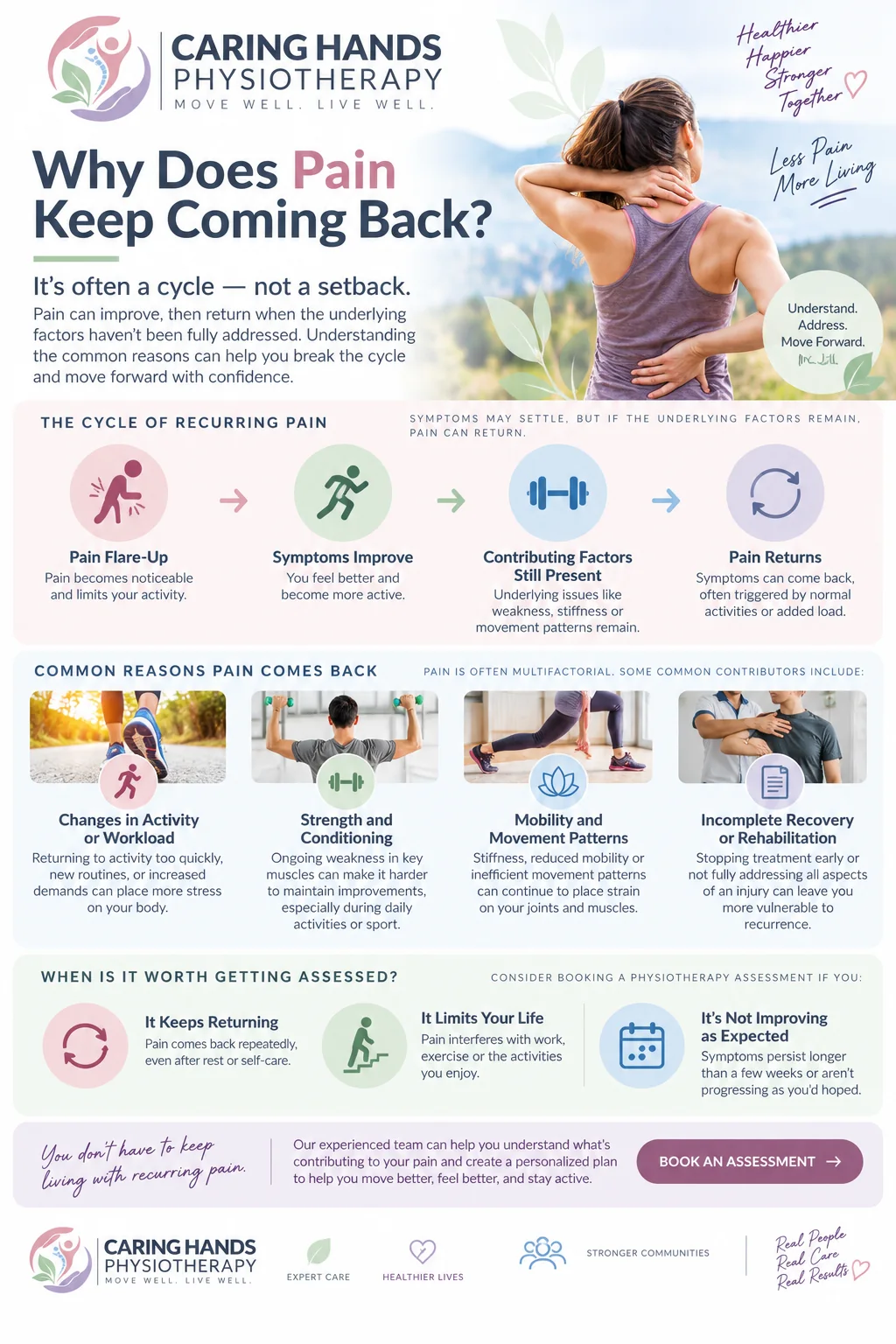
This infographic explains why pain can improve and then return, some of the factors that may contribute to recurring symptoms, and when it may be worth getting assessed.
Common Factors That May Contribute to Recurring Pain
Recurring pain is often influenced by more than one factor. What matters for one person may be very different for another, but some common considerations include:
Activity and workload changes. Returning quickly to exercise, increasing training, doing more physical work or simply becoming busier can place different demands on your body.
Strength and conditioning. After a period of reduced activity or injury, strength and physical capacity may not yet match the demands of work, sport or everyday activities.
Mobility and movement. Changes in mobility or the way you move may influence how different muscles and joints respond as activity increases.
Recovery and rehabilitation. Feeling better is an important milestone, but symptoms settling does not always mean rehabilitation is complete. A gradual return to normal activity may be appropriate depending on the individual.
When Is It Worth Getting Assessed?
An occasional ache after an unusually busy or active day does not necessarily require treatment. However, it may be worth considering a physiotherapy assessment when pain keeps returning, begins interfering with your normal activities or is not improving as expected.
An assessment gives your physiotherapist an opportunity to understand your symptoms, review your activity and health history, assess movement and function, and discuss an appropriate plan based on your individual needs.
Pain keeps returning — Symptoms improve but repeatedly come back with work, exercise or everyday activity.
It is limiting your life — Pain is causing you to avoid or modify activities you would normally do.
It is not improving as expected — Symptoms are persisting despite rest, activity changes or previously recommended exercises.

Ready to Get Moving Again?
Choose the Caring Hands clinic most convenient for you to learn more or book an appointment.
Same-week appointments are often available. Direct billing is offered for many insurance providers.
How Much Does Physiotherapy Cost in Calgary?
The cost of physiotherapy depends on several factors, including whether this is your first appointment and the type of treatment recommended following your assessment.
For current fees, what's included in your appointment, insurance information and direct billing, visit our complete Physiotherapy Pricing Guide.
Our complete pricing guide explains appointment fees, treatment options, insurance coverage, and what to expect during your visits—helping you make an informed decision before booking your physiotherapy assessment.
Enter your text here...