
Back pain can affect everything from sitting and sleeping to working, exercising and enjoying everyday activities. If you’re looking for treatment, you may be wondering whether physiotherapy or massage therapy is the better choice for your back pain.
Both can play a role in managing back pain, but they are different healthcare services with different approaches. Physiotherapy generally focuses on movement, function and rehabilitation, while massage therapy focuses more directly on muscles and other soft tissues. The right choice depends on your symptoms, how your back pain is affecting you and what you want to achieve.
For a broader look at causes, symptoms and treatment options, see our Back Pain Treatment in Calgary guide.
Quick Answer: Physiotherapy or Massage Therapy for Back Pain?
For back pain, physiotherapy may be a good starting point when pain is affecting movement, strength or everyday function, or when rehabilitation after an injury is needed. Massage therapy may be helpful when muscle tension, tightness, stiffness or soreness are prominent concerns.
Neither treatment is automatically better for back pain. The right approach depends on your symptoms, goals and individual circumstances. In some cases, physiotherapy and massage therapy can complement one another as part of your overall care.
Is Massage Therapy the Same as Physiotherapy?
No. Although both may involve hands-on treatment, massage therapy and physiotherapy are distinct healthcare services. Physiotherapy focuses more broadly on movement, function and rehabilitation, while massage therapy focuses primarily on muscles and other soft tissues.
For back pain, either — or sometimes both — may be appropriate depending on your symptoms and goals.
Massage Therapy
30-minute massage
$60-$85
----------------------
45-minute massage
$80-$100
----------------------
60-minute massage
$100-$120
----------------------
90-minute massage
$145-$165
What Does Physiotherapy Do for Back Pain?
Physiotherapy takes a broad approach to back pain by looking at how you move, how your back pain affects everyday activities, and where strength, mobility or function may be limited.
A physiotherapist may assess your movement, strength and mobility and discuss how your symptoms affect work, exercise, sleep and daily activities. Based on that assessment, treatment may include therapeutic exercise, education, activity guidance and hands-on techniques when appropriate.
The goal is to help you move and function more comfortably and build the strength and confidence needed to return to your normal activities. This can be particularly useful when back pain is limiting movement, recurring, affecting work or exercise, or when you need structured rehabilitation following an injury.
At Caring Hands, physiotherapy treatment is tailored to the individual rather than using the same approach for every person with back pain.
What Does Massage Therapy Do for Back Pain?
Massage therapy takes a more direct approach to the muscles and other soft tissues that may contribute to back discomfort. Hands-on techniques can be used to address areas of muscular tension, tightness, stiffness and soreness.
For someone with back pain, massage therapy may help reduce muscle tension, promote relaxation and make movement feel more comfortable. It may be particularly useful when muscular tightness or soreness is a prominent part of the problem, including discomfort associated with prolonged sitting, work, exercise or everyday activity.
Massage therapy can also play a complementary role alongside other forms of care when both muscular symptoms and broader movement or rehabilitation needs are present.
At Caring Hands, massage therapy is tailored to your symptoms, comfort and individual treatment goals.
For a closer look at when massage may help, the types of back pain that may respond to treatment and when another assessment may be appropriate, read our complete guide to Massage Therapy for Back Pain in Calgary.
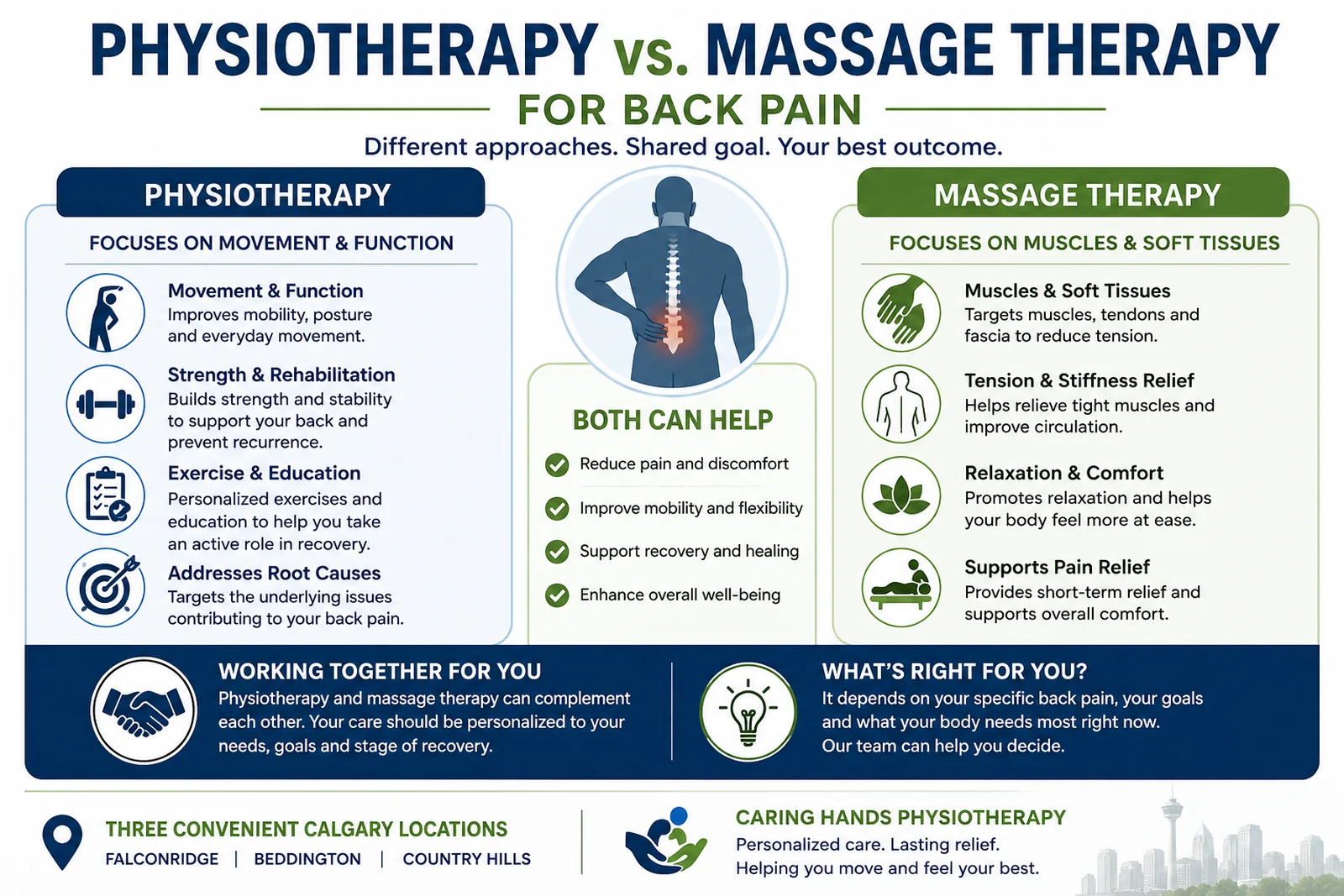
Physiotherapy vs. Massage Therapy: Key Differences
Physiotherapy and massage therapy can both be used as part of back pain care, but their focus and treatment approaches are different.
| Physiotherapy | Massage Therapy | |
|---|---|---|
| Primary focus | Movement, function and rehabilitation | Muscles and other soft tissues |
| Assessment | Movement, strength, mobility and function | Muscular and soft-tissue concerns |
| Exercise | Often part of treatment | Not typically the primary focus |
| Hands-on treatment | May be included | A central part of treatment |
| Muscle tension | May be addressed | Common treatment focus |
| Rehabilitation | Often a major component | May complement rehabilitation |
The important distinction is that choosing between the two should be based on what you are experiencing and what you want to achieve, rather than assuming one treatment is better than the other.

Book Your Back Pain Appointment
Choose Your Caring Hands Calgary Clinic
Physiotherapy and massage therapy appointments are available. Choose the Caring Hands Location most convenient for you.
When Might Physiotherapy Be a Good Choice for Back Pain?
Physiotherapy may be a good starting point when back pain is affecting how you move or limiting your normal activities. Because physiotherapy includes assessment and rehabilitation, it can be particularly useful when restoring function is an important part of your recovery.
You may consider physiotherapy when:
Back pain makes bending, lifting or walking difficult
Pain is interfering with work, exercise or everyday activities
Symptoms developed following an injury
Back pain keeps returning
You have reduced strength, mobility or confidence with movement
You are trying to return safely to work, sport or regular exercise
Treatment is based on your individual assessment rather than the presence of back pain alone. Your physiotherapist can then develop a plan based on your symptoms, functional limitations and recovery goals.
When Might Massage Therapy Be Helpful for Back Pain?
Massage therapy may be helpful when muscle tension, tightness, stiffness or soreness are prominent parts of your back discomfort. Its hands-on approach focuses directly on muscles and other soft tissues.
You may consider massage therapy when:
Your back feels tight or stiff
Muscle soreness is a primary concern
Prolonged sitting or work contributes to muscular tension
You experience muscle discomfort after exercise or physical activity
Relaxation and reducing muscular tension are treatment goals
Massage is being used alongside a broader rehabilitation plan
Back pain can have many different causes, however. Severe, worsening or unexplained symptoms should not simply be assumed to result from tight muscles and may require further assessment.
Can Physiotherapy and Massage Therapy Work Together?
Yes. Physiotherapy and massage therapy can sometimes complement one another because they address different aspects of back pain and recovery.
Massage therapy may help address muscular tension, tightness and soft-tissue discomfort, while physiotherapy can focus more broadly on movement, strength, function and rehabilitation.
For example, someone working through a physiotherapy rehabilitation program may also use massage therapy to help manage muscular tension or soreness. Whether combining the two makes sense depends on your symptoms, treatment goals and individual circumstances.
The key is coordinated, personalized care rather than assuming that everyone with back pain needs the same combination of treatments.
Does Acute vs. Persistent Back Pain Affect the Choice?
It can. With recent or acute back pain, the nature of the symptoms, how they started and how much they affect movement and everyday activities can help determine an appropriate approach.
With persistent or recurring back pain, factors such as mobility, strength, activity tolerance, work demands and patterns of recurrence may become increasingly important. Physiotherapy may play a larger role when movement and rehabilitation need to be addressed, while massage therapy may help when muscular tension or soreness is also present.
For more information about different types of back pain, symptoms and treatment approaches, see our Back Pain Treatment in Calgary guide.
When Should Back Pain Be Medically Assessed?
Most back pain does not indicate a serious medical problem, but some symptoms require prompt medical attention.
Seek medical assessment if back pain follows significant trauma, is severe or rapidly worsening, or is accompanied by symptoms such as new bowel or bladder changes, numbness around the groin or saddle area, significant or progressive weakness, fever, or feeling generally unwell.
If you are uncertain about new or unusual symptoms, it is appropriate to seek medical advice rather than assuming the pain is muscular.
Finding Physiotherapy and Massage Therapy for Back Pain in Calgary
If back pain is affecting your comfort, movement or daily activities, choosing the right treatment starts with understanding your individual needs. Caring Hands Physiotherapy offers both physiotherapy and massage therapy in Calgary, allowing patients to access different approaches to back pain care.
Appointments are available at our Beddington, Country Hills and Falconridge clinics. Whether physiotherapy, massage therapy or a combination of care is appropriate will depend on your symptoms, goals and individual circumstances.
Frequently Asked Questions About Massage Therapy Costs in Calgary
Here are answers to some of the most common questions Calgary patients have about massage therapy prices, insurance coverage, direct billing and choosing the right appointment length.
Neither is automatically better for lower back pain. Physiotherapy may be more appropriate when pain is affecting movement, strength or function, while massage therapy may be helpful when muscle tension, tightness or soreness is a prominent concern. The best approach depends on your symptoms, goals and individual circumstances.
Massage therapy may be helpful when back discomfort involves muscular tension, tightness, stiffness or soreness. However, back pain can have many causes. Severe, worsening or unusual symptoms should be appropriately assessed rather than assumed to be muscular.
Consider physiotherapy when back pain is limiting movement or everyday activities, recurring, affecting work or exercise, or requiring rehabilitation after an injury. A physiotherapist can assess how your symptoms are affecting movement and function and develop an individualized treatment plan.
Yes. Physiotherapy and massage therapy may complement each other when appropriate. Physiotherapy can address movement, function and rehabilitation, while massage therapy can focus on muscular tension and soft-tissue discomfort. Whether you benefit from one or both depends on your individual needs.
A physician's referral is generally not required to book physiotherapy or massage therapy in Alberta. However, some extended health insurance plans may require a referral for reimbursement, so check the requirements of your individual benefits plan before treatment.
Book Your Back Pain Appointment
Choose Your Caring Hands Calgary Clinic
Physiotherapy and massage therapy appointments are available. Choose the Caring Hands Location most convenient for you.
Enter your text here...