
Aging well means staying active, mobile, and confident in everyday movement. As we age, natural changes in strength, balance, and flexibility can influence how easily we move and how independent we feel in daily life.
Physiotherapy for healthy aging focuses on supporting long-term mobility, balance, and independence rather than reacting to injury. Through personalized care, physiotherapy for older adults can help improve movement, manage stiffness or discomfort, and support confidence with everyday activities at any stage of life.
The infographic below provides an overview of how physiotherapy supports healthy aging by improving strength, mobility, balance, and overall independence.
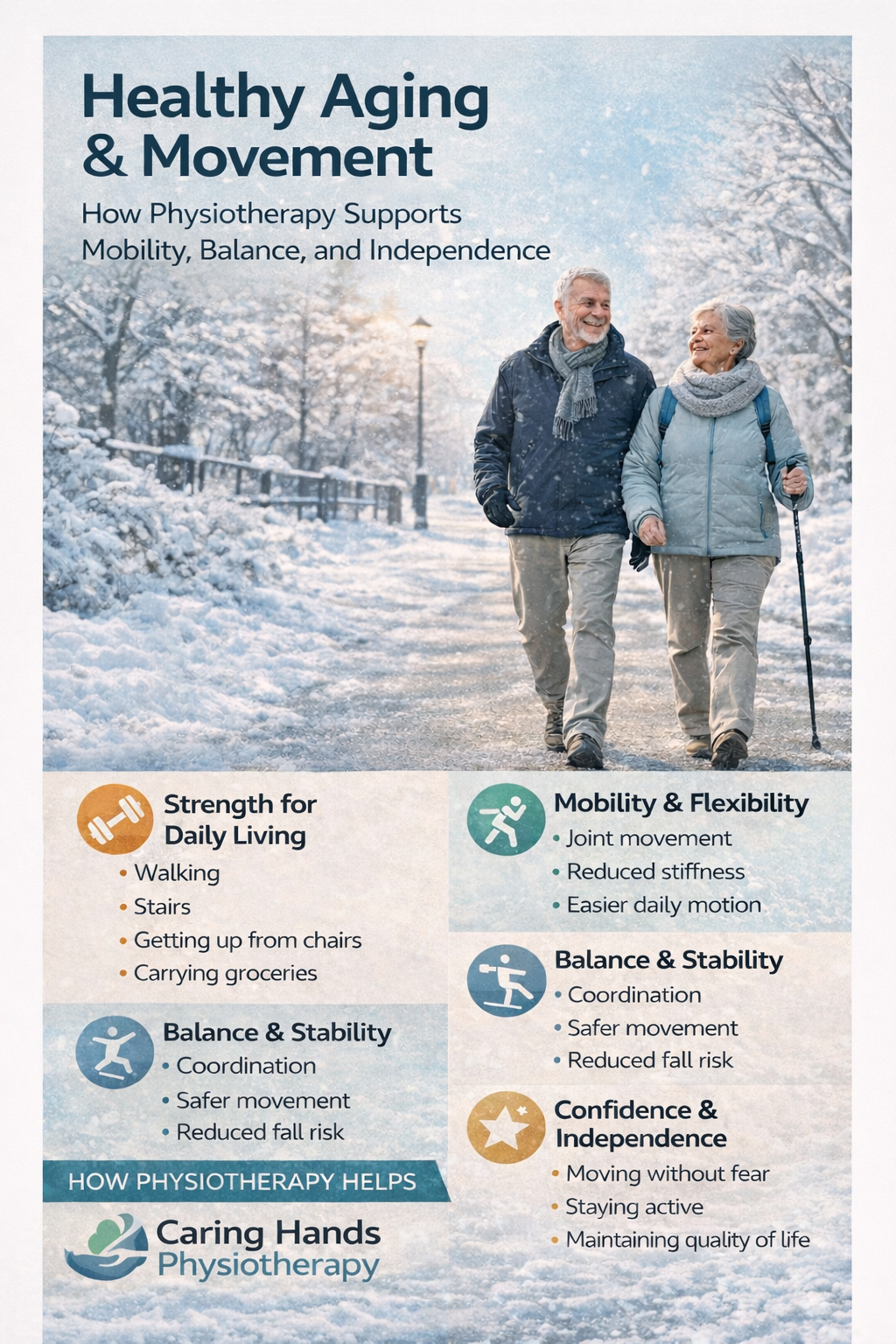
This infographic highlights common winter fall injuries caused by snow and ice, including shoulder, neck, and soft tissue injuries, and explains how conservative care supports recovery.
How Physiotherapy Supports Healthy Aging
Physiotherapy plays an important role in supporting healthy aging by helping older adults maintain strength, mobility, and balance throughout daily life. Rather than focusing only on injury recovery, physiotherapy emphasizes proactive care that supports movement, independence, and long-term function.
Through personalized assessment and treatment, physiotherapy for older adults can help address common age-related challenges such as reduced flexibility, joint stiffness, muscle weakness, and balance changes. These approaches are designed to support safe, confident movement while adapting to each individual’s needs and goals.
Treatment plans often combine exercise therapy for mobility and balance, hands-on physiotherapy techniques, and education to help improve mobility and balance, reduce discomfort, and support independence with everyday activities such as walking, climbing stairs, and getting up from chairs.
Strength and Mobility for Everyday Activities
Maintaining strength and mobility is essential for staying active and independent as we age. Everyday movements such as walking, standing up from a chair, climbing stairs, or carrying groceries all rely on coordinated strength, joint mobility, and control.
Physiotherapy helps older adults maintain and improve these abilities through individualized treatment that focuses on functional movement rather than isolated exercises. By addressing muscle weakness, joint stiffness, and movement patterns, physiotherapy can help support safer, more efficient movement in daily life.
In some cases, supportive treatments such as massage therapy for older adults may be used alongside exercise-based care to help reduce muscle tension, improve comfort, and support overall mobility as part of a comprehensive physiotherapy plan.
Balance, Stability, and Confidence With Movement
Balance and stability naturally change with age, which can affect confidence during walking, turning, or navigating uneven surfaces. These changes don’t necessarily indicate injury, but they can influence how safe and steady everyday movement feels over time.
Physiotherapy can help improve balance and coordination through balance and coordination training that focuses on posture, strength, and controlled motion. Improving balance not only supports physical safety but also helps older adults feel more confident staying active and engaged in daily life.
Addressing balance early can also help reduce fall risk by improving reaction time, stability, and awareness of movement. Preventive physiotherapy focuses on maintaining independence and confidence rather than waiting for a fall or injury to occur.
When to Consider Physiotherapy for Healthy Aging
Changes in mobility, balance, or confidence with movement can happen gradually and are not always linked to a specific injury. If you or a loved one are noticing stiffness, reduced strength, balance concerns, or hesitation with everyday activities, physiotherapy can help provide personalized support at any stage of aging.
A physiotherapy assessment focuses on understanding individual needs, movement patterns, and goals to support long-term mobility and independence. You can book a physiotherapy assessment with Caring Hands Physiotherapy to explore treatment options tailored to healthy aging, mobility, and confidence with movement.